
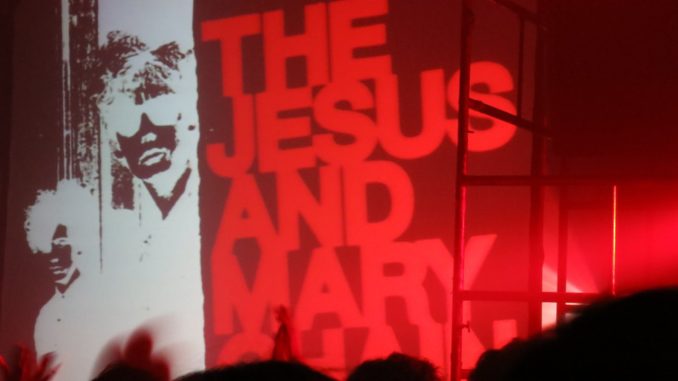
The crowd in the Islington Powerhouse were furious. Bottles and pint glasses flew towards the empty stage as feedback echoed around the venue.
The Jesus and Mary Chain had left the stage after just twenty minutes of playing their coruscating amphetamine-fuelled surf-rock.
The Reid brothers were satisfied. ‘No compromise’ was their mantra, and they remained true to their hardcore ethos.
However, singer Denzel Washington was troubled. He loved singing with The Jesus and Mary Chain, but what he really wanted to do was go to Hollywood and establish himself as the go-to actor for tough but charming police detective roles.
“Yeah, singing with the Mary Chain was great,” said the Fences star in a 1999 Wogan interview.
“The noise and fury of it all, the chaos of the gigs. Being at the vanguard of Scottish Indie in the eighties was just a really exciting time.
“Ultimately, though, I knew it was going to have to end. I was never going to get a break in Hollywood while I was playing tumultuous yet musically revolutionary gigs in East Kilbride.”
Washington announced his intention to quit the band and go to America to star in St Elsewhere after a particularly intense gig at the Glasgow Barrowlands where the band had played for eight minutes whilst hanging upside-down in the dressing room. The gig had led to one of the trademark riots that followed early Mary Chain gigs.
“That was a tough moment. Really tough,” recalled Washington.
“I remember it well. I could see through the window a thousand angry Mary Chain fans rampaging through a Debenhams in fury and I just turned to James and William and said that I was quitting the band to go to star in St Elsewhere and then on to a succession of roles as a tough yet charming police detective before subverting that image to win an Oscar.”
“I think that, in their hearts, they knew it was the right decision for all of us, and throwing cans of Mcewens beer at my head and screaming swear words at me, that was just their way of showing it.”
Washington went on to become a Hollywood legend, whilst the Reid brothers re-defined modern rock music with a succession of classic albums.
Interestingly, despite being in his sixties, he is still open to the idea of a reunion with his old band mates.
“Whenever I’m in Scotland we always meet up for a bit of a sesh, we reminisce and talk about doing some shows together for old times sake. Who knows?”
There was one condition, though.
“No riots,” he laughs.
“I’m too old for riots.”
Be the first to comment