
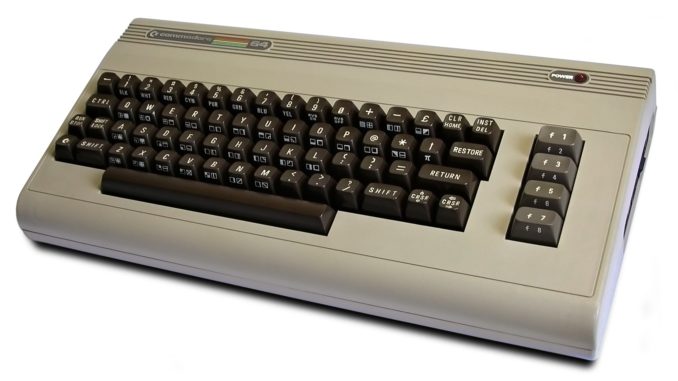
Diane Keaton stepped back from the sea of technical diagrams that covered the boardroom table. All eyes were on her. A tense silence had fallen across the room.
“64K,” said the Oscar-winning actress.
“This sucker needs 64K of memory.”
Uproar. A home computer with 64K of memory? It was unheard of. But, no matter how outlandish the idea, no matter how crazy, after a few minutes, the technicians got to work redrawing the plans.
If Diane Keaton said 64K was possible in a home computer, then 64K was possible in a home computer.
Diane Keaton was one of the hottest actresses in Hollywood throughout the seventies, she’d starred in films as diverse as the Godfather and the Godfather part II. She’d won an Oscar for her eponymous turn in Annie Hall playing someone or other.
But as the seventies became the eighties she hungered for a new challenge.
“I’d worked with all the greats – Coppela, Allen, some guy with a creepy beard. I needed to stretch myself, to try something new, so designing a home computer seemed the obvious choice,” she says in her 2011 memoir – Then Again.
To many people’s surprise, Commodore snapped her up immediately to work on their follow-up to the Vic 20.
“I don’t think people realised I’d been fascinated by home computers for some years, I’d actually written the hit game Kevin Tom’s Football Manager on the Sinclair ZX81.”
It was the Love and Death star that led development of the Commodore 64, and it was her vision that turned it into the revolutionary computer that has proved so influential on the industry ever since.
Sadly, her involvement in computers ended shortly after her most famous triumph
“I got disillusioned. After the ’64, I got this idea. It was really ambitious. I had this vision of all the computers in the world connected to one another in a way that could allow simple and immediate exchange of information.
“I remember telling my plans to this British guy I met, and a week later, he’d announced that he’d invented the internet. Tim Berners-Lee – what a prick.
“So, I go disillusioned and went back into film-making. I ended up making Father of the Bride with Steve Martin. Do you know how disillusioned you have to be to make Father of the Bride with Steve Martin?”
Whilst Diane Keaton’s legacy in computers is undeniably huge, one can only speculate over what she should have achieved had she not returned to film.
Computer-controlled super-robots to colonise Mars? An accurate computer fortune-teller? Undoubtedly. But sadly they will never be, and we will have to console ourselves with Diane Keaton’s Commodore 64.
The Dumb Movie Database
CLICK HERE FOR THE DUMBEST MOVIE DATABASE ON THE WHOLE INTERNET
TV FILM GUIDE
CLICK HERE FOR OUR WEEKLY TV GUIDE
Be the first to comment